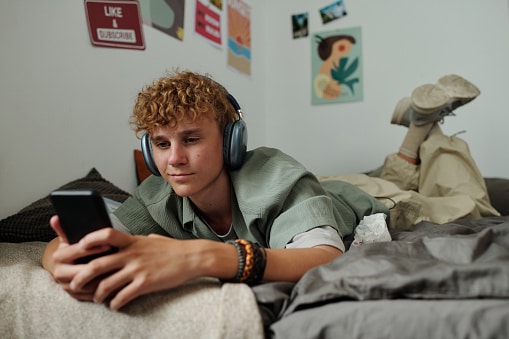
Seeing kids and teenagers plugged into headphones is a common sight nowadays. When you can’t hear the sound from their phone or personal entertainment device, you may not realize your child is listening at unsafe volume levels. In fact, it’s completely possible for headphones to reach unsafe volume levels, which can lead to hearing loss for your child.
Unsafe Volume Levels
Loud noises produce powerful sound waves that damage the cells in our ears. Any sound over 85 decibels can cause damage. For reference, a crowded restaurant is usually about 80 decibels. Additionally, the time of exposure matters: the longer you’re exposed to the loud noise, the greater the hearing damage.
At their maximum volume, headphones can reach 100 decibels, a level that can cause permanent hearing damage in as little as 10 minutes.
Why It Especially Matters for Kids
Noise-induced hearing loss is on the rise in young people today. It’s estimated that 17% of teens have some degree of NIHL, an all-time high.
Your child’s body is still developing, and the ears are no exception. The structures of their inner ears are smaller and more delicate than those of an adult, and they’ll continue to grow until they reach their mature size.
It’s especially critical to monitor hearing health when they’re still developing their speech and language skills, as hearing impairments can affect this, in turn affecting their learning, behavioral and developmental abilities.
Help Your Kids Use Their Headphones Safely
The above information isn’t meant to scare you into taking your kid’s headphones away. There are plenty of good habits you can encourage in your child to ensure they’re safely using their headphones.
Turn the Volume Down
Help your child monitor their volume level when listening to headphones. A good rule of thumb is to keep volume levels between 50 and 60% of max volume for kids. (Adults can take it up to two-thirds, or 66%, of max volume.) This keeps the volume at safe levels while still allowing them to hear clearly.
Take Breaks
To protect your child from the cumulative effect of prolonged exposure to loud noise, encourage taking breaks from headphones at least every hour. They can take this opportunity to sit in a quieter environment for a few minutes.
Get Devices that Fit Well
When headphones don’t fit well, they can let in a lot of background noise. To help with this, use over-the-ear headphones. Over-the-ear models create a better seal to block out ambient sounds, so your child will be less inclined to crank up the volume to drown out background noise. Noise-canceling headphones will also help with this.
Avoid earbuds for young children. The buds may be too big for their ear canals, and dirt and grime can build up on these devices, leading to ear infections.
Use Sound-Limiting Technology
There are smartphone apps and volume-limiting styles of headphones and earbuds that you can make use of to keep volume levels safe. Some devices even allow you to put a volume cap on them. Explore your child’s devices for this setting.
Learn More
To learn more about children’s hearing loss, monitoring for noise-induced hearing loss or how pediatric hearing loss impacts child development, give us a call at The Hearing & Speech Center.